
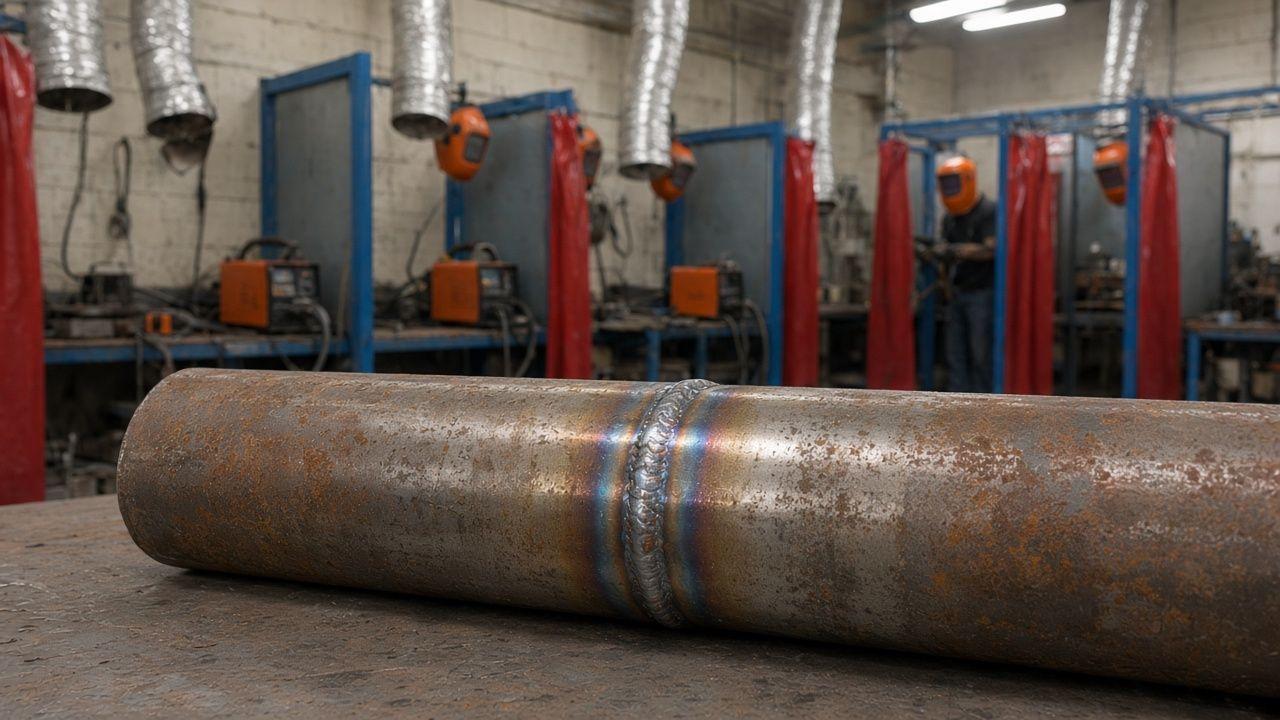
Pipe welding: uphill vs. downhill, when and why?
Welding Magazine
In the 5G position, the choice between downhill and uphill is driven mainly by wall thickness and alloy content, not by pipe diameter. Here is how to decide without guessing.
n the position, with the pipe axis horizontal and the joint fixed in place, the welder faces two main working directions: and . This is not personal comfort or an old shop habit. Under classic pipe welding procedures, the choice rests mainly on and alloy content, not on diameter. A large or small diameter can demand the same method if wall thickness and metal are similar. Crews share a clock language: the top of the pipe is 12 o'clock and the bottom is 6 o'clock. That language makes starts, stops, and joint closure unambiguous, and when helpers work the far side it shortens instructions and prevents mistakes. Mix up 12 and 6 and you mix up downhill and uphill: that is a wrong heat balance, not style. Understanding thickness and alloy logic saves time, avoids unnecessary root burn-through, and yields more ductile . Mixing concepts between positions, especially 5G and , is a common source of bad field decisions.
Downhill starts at 12 o'clock and progresses down to 6 o'clock on each side. After one side is closed, return to the top and repeat on the other side until both meet at the bottom. Solid tack welds must hold gap and first, because without stable fit-up even the right method will not save the root. Downhill suits with a relatively thin wall, about one-eighth inch to about three-eighths inch. That is why it is common on cross-country transmission lines and low-pressure storage vessels when thickness stays under about three-eighths inch. At those thicknesses downhill allows higher with less root burn-through. Crews like the pace, but the pace is justified only when metal and thickness fit. are procedure, not a schedule shortcut. On thin wall, shorter dwell also lowers burn-through risk. Stay ahead of liquid so it does not choke the arc and create and inclusions. Direction by thickness and alloy always comes before pace or hand habit.
The metallurgy is straightforward. A thin wall holds heat longer than a thick wall at similar travel speed and , so the weld zone cools more slowly. Slow cooling favors a softer, more ductile for joints that see field loads and temperature changes. Fast downhill on thin wall is therefore a match to metal behavior, not a reckless shortcut. Successive beads improve further: each reheats the previous one and keeps relative cooling slower. Downhill uses a fast-freeze electrode with a light coating, such as 6010, 6011, 6012, 7010, and 7014, which produce little slag. As the electrode travels down, puddle and slag tend to follow and choke the arc; fail to lead the slag and you get porosity and slag inclusions. Clean layers and reheating still matter. Chase the puddle instead of leading it and you pay in root quality. Copy downhill pace onto a heavy wall and the heat balance flips even if the motion looks the same outside.
Heavy-coated electrodes, such as 7024 or iron-powder types, are not suited to downhill. Slag volume is too high, and slag trapping, porosity, and become hard to solve. They also need higher , which raises burn-through risk on thin joints or imperfect fit-up. In some cases straight (electrode negative) with downhill helps reduce over- on imperfect fit-up. That does not replace good fit-up or justify wild gaps, but it gives operating room when the pipe must close. Downhill direction, a light electrode, and suitable polarity are a work tool, not magic: judgment rests on the puddle and the , not habit alone. Force heavy electrodes downhill and you pay later in cleaning and repairs. Correct rod angle, enough speed, and the right electrode keep the arc alive and clean above the puddle.
Uphill reverses the picture. After tacking, start at 6 o'clock and climb to 12 o'clock on each side. The second side again opens from the bottom and closes at the top. This is preferred for heavy wall and alloy steels. Speed is not the first goal: put more heat into the joint so cooling stays slower despite the large metal mass. A thick wall acts as a ; heat leaves the weld zone faster, cooling rate rises, and brittleness risk rises with it. Mild steel already shows the effect; sharpens it. The same fast downhill that works on a thin line can be a poor choice on heavy pipe or metal sensitive to rapid cooling. Procedure texts stress thickness and alloy, not diameter. Finish an uphill pass at downhill pace on heavy wall and you bring back fast cooling. In uphill, patience is a metallurgical tool.
To slow cooling, slow travel and deposit a heavier bead. Climbing from bottom to top does both: the puddle stays longer, more filler enters, and heat stays in the joint. Successive beads still reheat earlier ones and improve ductility, but from a different starting heat balance. is similar in both methods: edge prep, cleaning, alignment, and tacks remain the foundation. What mainly changes is joint size and bevel detail by thickness and pipe type. First build a correct joint, then choose downhill or uphill by metal and thickness. Bad preparation will not be fixed by clever travel direction. In modern piping, the more sensitive the material is to cooling and HAZ , the more important speed and heat-input control become before you choose direction.
Modern piping also brings higher-strength grades and low-alloy steels that improve mechanical properties without loading too much carbon. Uphill has a clear advantage on cooling-sensitive materials because it slows and thickens the bead. Downhill remains excellent for thin-wall mild steel, but not an automatic default for every pipe that looks similar outside. On transmission lines, helpers matter for cleaning, , and watching defects before cover passes, yet they cannot fix a wrong direction choice. The 2G position has its own horizontal method around the pipe; it is not 5G downhill or uphill, so do not mix positions. Uphill versus downhill talk starts with horizontal pipe in 5G, then extends carefully to or incline. In the end, both directions answer the same heat-balance problem on a fixed 5G joint: one uses thin-wall slow cooling to travel fast and safely; the other fights heavy-wall fast cooling with slower travel, a heavier bead, and a suitable electrode.
Before deciding, ask three questions: wall thickness, metal type, and HAZ cooling demand. Thin mild steel points to downhill. Heavy wall or sensitive alloy points to uphill. Only then discuss speed, electrode, and polarity. Inside either method, quality still needs discipline: cleaning between layers, clean tie-ins, puddle control, and watching the keyhole at the root. Anyone who wants to go deeper will find a structured path in our pressure pipe . The right travel direction opens the door to quality, but it does not replace the rest of the procedures. When direction, electrode, and preparation work together, the 5G joint closes in a more stable and predictable way.
Found a mistake in the article? Have an idea or suggestion? Want to publish with us?
Share this article
Related course
More from the magazine
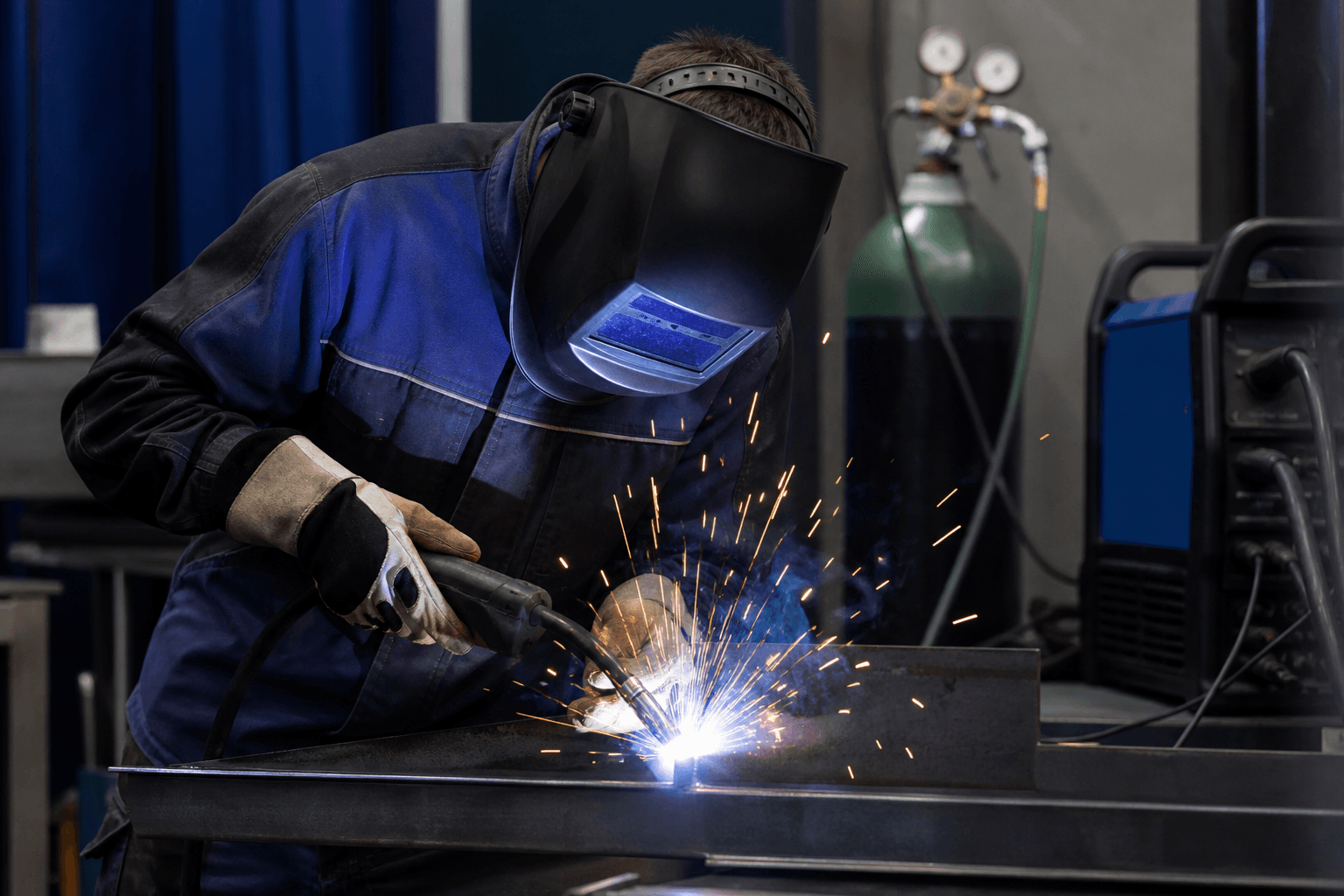
Complete MIG CO2 Welding Guide: What to Know Before the Course
MIG welding with CO2 gas is one of the most in-demand processes in industry. Here you will understand equipment, safety, technique, and what it really takes to enter the trade with confidence.
Read the article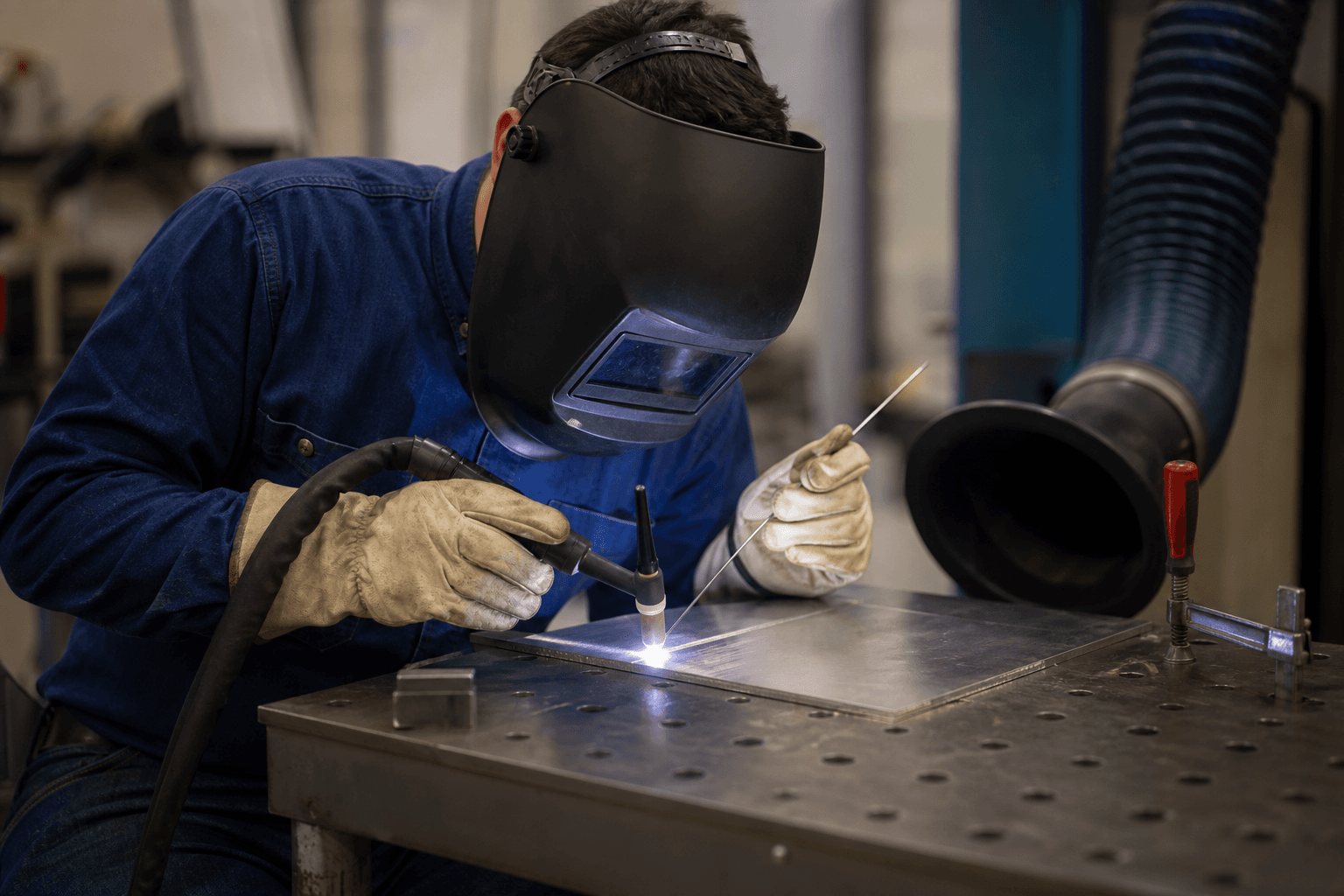
TIG Argon Welding: Who It Suits and What Makes the Process Distinct
TIG welding delivers precise control and clean welds on stainless steel and aluminium. A guide for anyone considering a high-level specialty.
Read the articleWelder's pocket glossary
Digital pocket glossary, a must for every welder
500 critical welding terms, now in the palm of your hand.

Welder's pocket glossary
Ready to get started?
Leave your details and our study advisor will get back to you with dates, costs, and admission requirements.
Leave details