
TIG Argon Welding: Who It Suits and What Makes the Process Distinct
Welding Magazine
TIG welding delivers precise control and clean welds on stainless steel and aluminium. A guide for anyone considering a high-level specialty.
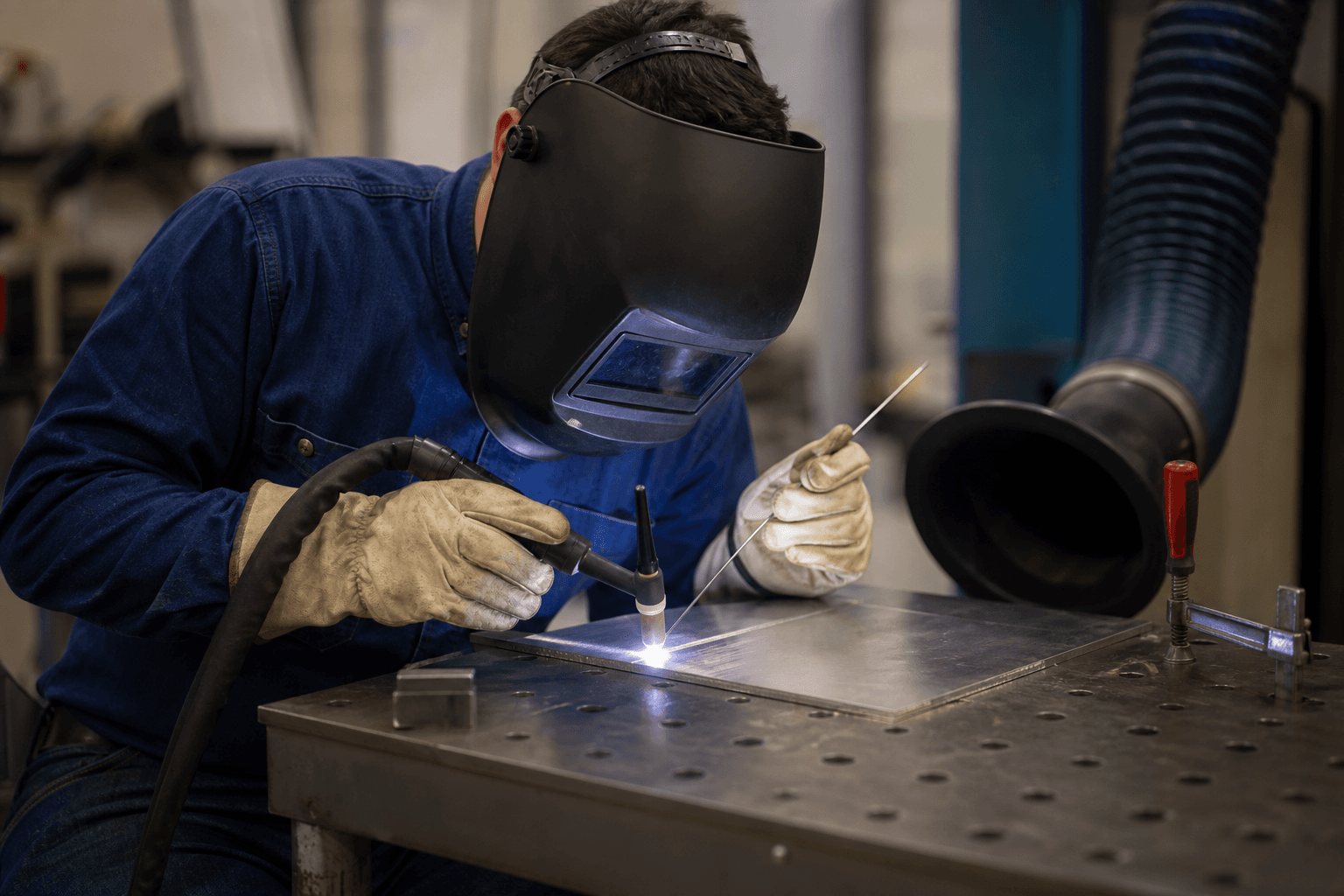
IG welding with , or GTAW, is widely regarded as one of the most precise and clean processes in welding. A non- and an inert , usually argon, protect the while is fed by the other hand, so the welder controls current, pool, and filler separately. The result is aesthetic beads, high heat control, and an excellent fit for , aluminium, and thin carbon steel. The process suits industries where appearance and cleanliness are critical: food, pharmaceuticals, medical equipment, aerospace, metal design, and architectural work. In stainless pipe welding and other high-precision jobs, TIG is often the standard. Anyone chasing only mass production speed on thick carbon steel may prefer MIG welding, while anyone chasing precision and control will find a professional home in TIG. A strong TIG builds not only hand skill, but also discipline around cleanliness, preparation, and patience.
Two-handed work is the first challenge for beginners. One hand holds the at a stable angle while the other feeds filler rod into the pool edge at a measured pace. Hand coordination, a stable sitting or standing posture, and foot control of the pedal on AC/DC machines with all demand practice. That is why many students arrive with a stick or MIG foundation before moving into TIG. selection is not trivial. Different tungsten types and diameters suit different working currents. Correct tip sharpening matters for DC welding, and aluminium on AC often uses a more ball-shaped tip. Poor preparation hurts and bead quality. A consistent, clean sharpening routine, with stainless tools kept separate from carbon-steel tools, prevents contamination and needless frustration. A professional TIG welder keeps an organized tungsten kit and does not mix tooling between materials.
Argon as gas provides a stable arc and solid protection, but flow rate, cup cleanliness, and avoidance of air aspiration still matter. Flow that is too low causes oxidation and unwanted on stainless. Flow that is too high can create turbulence and pull air into the shield. Material cleanliness, removing grease, oxide, and dirt, is especially critical in TIG, because the process exposes every preparation flaw. Oil from bare hands, aluminium oxide, or dirt on the filler rod create defects immediately, so students learn cleaning habits with dedicated stainless brushes kept apart from carbon-steel brushes. Filler rod choice must match the and application requirements, because the wrong rod can produce a bead that looks fine outside yet is weak or corrosion-sensitive. Dry, clean filler storage is part of the trade. In stainless pipe welding, an internal argon is often required so the root side does not oxidize or develop dark heat colors.
Safety in TIG welding follows the same general principles, with process-specific emphasis. Arc radiation is intense and requires a suitable . TIG gloves are often thinner than MIG gloves to allow fine control, yet they must still resist heat. Ventilation matters here too, especially on stainless where fume may contain chromium oxides. also means covering exposed skin from UV, because it is easy to forget protection when working small joints. Aluminium TIG is a chapter of its own: aluminium conducts heat well and carries a stubborn oxide layer, so AC with cathodic cleaning is common, and heat control prevents burn-through and uneven . A professional course practices carbon steel and stainless on DC as well as aluminium, so graduates leave with breadth rather than one narrow trick. On very thin sheet, heat management is the central challenge, and short weld segments with staggered help limit warping and .
Pedal current control is what sets TIG apart from most other welding processes. The welder can start gently, build a pool, raise current while filling, then ramp down at the end to avoid a crater or . That is why TIG feels like a precision instrument rather than only a power tool. TIG bead quality is judged by uniformity, penetration, cleanliness, and external appearance. On stainless, heat tint and root-side protection in piping also matter, because corrosion sensitivity after is not only cosmetic. Common mistakes include feeding filler too early into the arc instead of into the pool edge, an unstable , a cup held too far from the work, and current that is too high on thin metal. Each of those errors can be corrected quickly with instructor feedback at the booth, which is exactly the advantage of small groups in a TIG welding course. Students who arrive from MIG should not copy the same angles and pace automatically. TIG demands a different patience and more controlled heat.
Choosing TIG versus MIG depends on the application. If the work is fast fabrication of steel structures, MIG is usually more efficient. If the work needs precision, cleanliness, special materials, or a high visual finish, TIG wins. Many welders learn both processes to widen employment options, and a common career path is stick or MIG as a base, then TIG as a specialty. Basic control on carbon steel can come relatively quickly, but high control on stainless and aluminium needs more hours, so choose a track with enough hands-on practice rather than short demonstrations only. Anyone aiming at precision industries should understand that TIG is also documentation discipline, material control, and keeping the work environment clean to specification. Hand-coordination drills can start even without an arc, and five minutes a day of that kind of practice improves feel in the next lesson. Knowing when to choose AC versus DC, and how to read the pool in real time, also comes only from guided practice.
Stainless TIG demands special attention to heat and contamination. Stainless is sensitive to overheating that can alter microstructure and invite later corrosion, so pedal control and fill pace are critical. Avoid contact between carbon-steel tools and stainless surfaces, and clean the joint before the arc. In stainless pipe welding, an internal purge filling the pipe with argon is often required so the root does not oxidize or develop black colors that signal oxidation. On carbon steel in DC the emphasis is even penetration and arc stability. On aluminium in AC the emphasis is oxide cleaning and heat management. A professional TIG welder builds a library of feel for each material: how a stable pool looks, when to add filler, and when to stop before burn-through. That understanding does not come from a short video. It comes from hours at a booth with an instructor explaining what happened and why. Even on thin pipe joints, pedal control prevents over-penetration that damages the inner wall.
In the argon TIG welding course at The Center for Welding Studies, theory and practice are combined: welding safety, materials, tungsten and gas selection, AC/DC machine setup, joint practice, and preparation toward . Groups stay small, and instructors are working professionals with industrial experience who coach at the booth rather than only lecturing in a classroom. The track runs within the Welding Technologies program under supervision, at our Tel Aviv and Beer Sheva schools, and graduates can receive a completion certificate and prepare for international certification. TIG welding is a long-term career investment: fewer arcs per day, more precision, quality, and openings into industries that value cleanliness and control. If you want to see a workshop up close, check dates, or understand whether TIG suits you after MIG or stick, contact us and we will gladly help you choose.
Found a mistake in the article? Have an idea or suggestion? Want to publish with us?
Share this article
Related course
Welder's pocket glossary
Digital pocket glossary, a must for every welder
500 critical welding terms, now in the palm of your hand.

Welder's pocket glossary
Ready to get started?
Leave your details and our study advisor will get back to you with dates, costs, and admission requirements.
Leave details